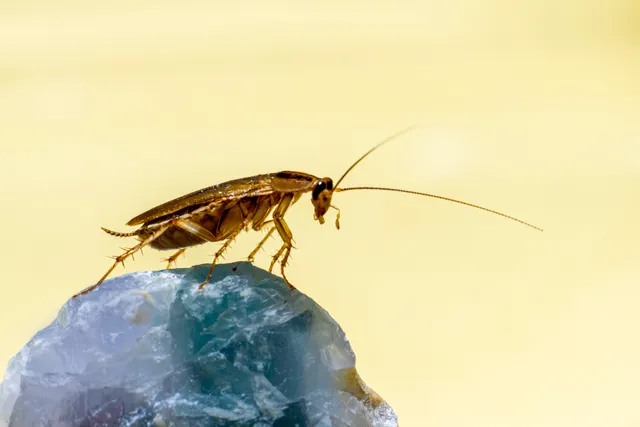
Cockroach activity can remain hidden behind appliances, in cabinets, or around plumbing until it becomes persistent. A practical response combines careful monitoring with attention to food, water, clutter, and building conditions; a single sighting does not reveal the size or source of the issue.
Signs of Cockroach Activity
Check for droppings that may look like dark specks or smears, shed skins, egg cases in protected spaces, or a stale odor where activity has continued. Cockroaches are often more active at night, so seeing one during the day can be a reason to look more closely, not a reliable measure of severity. Sightings near sinks, dishwashers, refrigerators, stoves, drains, deliveries, or stored cardboard can point to useful inspection areas. Different species use different parts of a building, so a generic photograph should not be treated as an identification.
Examples in Ohio
- American cockroach — OSU Extension describes it as an outdoor-associated species in some regions that can also persist as a serious indoor pest. OSU Extension · cockroach examples
- Pennsylvania wood cockroach — It lives outdoors in Ohio and may enter a home incidentally, but cannot establish itself indoors. OSU Extension · cockroach examples
Educational clues only; the page photograph does not identify a species.
Assessment and Scope
An assessment uses the reported locations and, where useful, monitors to understand activity and likely harborages. We consider species, moisture, heat, food storage, cleaning routines, clutter, gaps around plumbing, appliance voids, deliveries, and nearby units in a shared building. In an apartment or commercial facility, activity may cross walls or arrive with goods, so coordination with a manager or neighboring area can be important. The size of the structure, access to concealed areas, and whether preparation is possible all affect the scope.
Potential Treatment and Cost Factors
Depending on the findings, service may include monitoring, carefully placed bait, an insect growth regulator, or a targeted product labeled for the location. Preparation may involve cleaning food residue, reducing clutter, correcting leaks, and making affected spaces accessible. Follow-up visits are sometimes needed to evaluate monitors and adjust the plan. Spraying every visible area is not a substitute for reaching concealed harborages, and no service should promise that one visit will resolve every situation.
Cost factors include the likely species and activity level, square footage, number of rooms or units, access to appliances and plumbing spaces, sanitation or repair conditions, product and monitoring needs, and the number of visits recommended. Ask what preparation is needed, where materials will be placed, and how progress will be evaluated before work begins.
Prevention That Supports Control
Store food and waste in closed containers, repair leaks, dry damp areas, clean crumbs and grease, and limit cardboard or clutter near warm appliances. Seal gaps around utility penetrations when appropriate, but do not close an opening before determining whether activity is inside it. In multi-unit or commercial settings, consistent housekeeping and communication across affected areas often matter as much as an individual room.
Related Services
Homeowners can begin with residential pest control. Property managers, restaurants, offices, and other facilities can review commercial pest management. If sightings are concentrated around stored food or wall openings, an assessment can also distinguish cockroach activity from ant activity or a rodent concern.
When to Request Help
Request an assessment for repeated sightings, droppings, egg cases, activity in more than one room, or cockroaches appearing in a shared building. Do not wait for daytime sightings before asking for help; note where and when you see signs and what has already been applied.