Webs and occasional spiders are common around homes, but repeated activity in a living area, basement, garage, or entry can justify a closer look. Spider service is most useful when it addresses both the places spiders are using and the insects or conditions that draw them there.
Signs and Identification
Look for recurring webs in corners, under eaves, around windows, near exterior lights, in garages, or in undisturbed storage. Egg sacs, shed skins, and spiders appearing in several locations provide more information than one web that may have been abandoned. Web shape and location can help guide an assessment, but a quick view or an online stock image is not a dependable species identification. If you are concerned about a spider, do not handle it; note where it was seen or take a photo from a distance if you can do so without approaching it.
Examples in Ohio
- Grass spider — Agelenopsis pennsylvanica is one common Ohio species; dewy mornings can reveal webs across lawns. OSU Extension · Funnel Weaver Spiders
- Jumping spiders — A diverse family group among the most prevalent spiders in Ohio home gardens. OSU Extension · Jumping Spiders
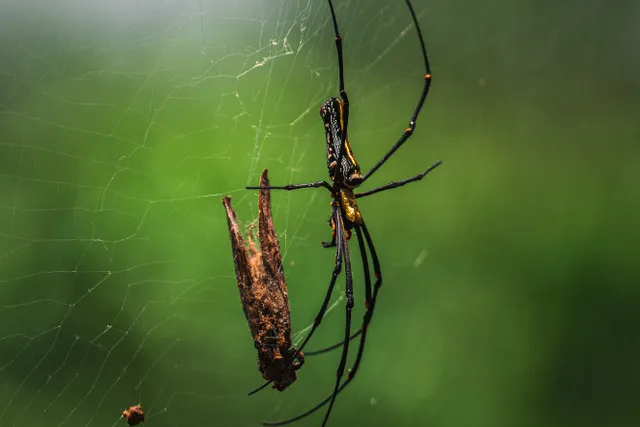
Educational clues only; the page photograph does not identify a species.
Assessment and Scope
We consider where webs and spiders are concentrated, the building openings and lighting nearby, moisture and shelter, and the presence of flying or crawling insects that may be serving as prey. Interior and exterior observations help distinguish a seasonal outdoor web from activity that is entering through screens, doors, vents, or other gaps. The extent of accessible web removal, the number of areas involved, and whether another pest is present all influence the recommended scope.
Potential Treatment and Cost Factors
A plan may include removal of accessible webs and egg sacs, monitoring, reducing harborage, and a product labeled for the specific exterior or interior use when appropriate. Because spiders can return when prey insects remain, reducing outdoor lighting that attracts insects, correcting moisture, and addressing screens or gaps can be as important as a targeted application. Product selection, placement, and any preparation should be explained before service; repeated activity may call for a follow-up assessment rather than an assumption that every spider has been removed.
Cost factors include the size and height of the structure, the number and accessibility of web sites, interior versus exterior work, clutter or vegetation, the presence of another pest, treatment and monitoring needs, and follow-up visits. A clear scope should identify which webs or areas can be reached and what prevention steps remain the property owner’s responsibility.
Prevention
Keep screens and door sweeps intact, reduce clutter in garages and storage areas, replace lights or bulbs when practical to reduce insect attraction near doors, and remove accessible webs during ordinary maintenance. Address leaks and keep vegetation from crowding vents and openings. These changes reduce favorable conditions without suggesting that a home can be made completely spider-free.
Related Services
A recurring food source may be addressed through residential pest control. If the insects are ants, see ant control; if stinging insects are gathering around an entry or eave, review wasp and hornet control.
When to Request Help
Ask for an assessment when webs return in the same places, spiders are entering living areas, egg sacs are present, or you cannot safely identify or approach what you found. Keep people and pets away from an unknown spider and share the location rather than disturbing it.