Mice and rats can enter through overlooked openings and stay out of sight for much of the day. A useful rodent assessment separates an isolated sign from ongoing activity, identifies how the animal is getting inside, and gives you a practical plan for monitoring and prevention.
Signs of Mice or Rats
Look for droppings in cabinets, along walls, near stored food, or around utility areas; gnawing on food packaging, wood, insulation, or wiring; shredded nesting material; and a stale odor in a concealed space. Scratching or running sounds in walls, ceilings, or attic areas may be more noticeable at night. Dark rub marks along a route can be a clue, but none of these signs identifies the species or proves that activity is current. Fresh and repeated signs in more than one area deserve attention.
Examples in Ohio
- House mouse — Small and gray-brown, with a gray or buff belly and scaly tail; commonly found around buildings. ODNR · Mammals of Ohio field guide
- Brown rat — ODNR notes it uses places offering food and shelter, including sewers and basements. ODNR · Mammals of Ohio field guide
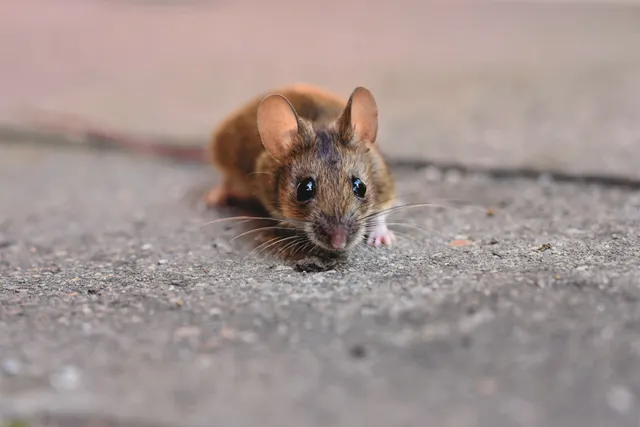
Educational clues only; the page photograph does not identify a species.
Assessment and Scope
An assessment follows the signs through accessible rooms, basements, attics, garages, crawlspaces, and exterior utility or foundation areas. We consider the likely species, active routes, nesting conditions, food and water sources, and openings around doors, vents, pipes, rooflines, and siding. Building layout, shared walls, recent construction, and the presence of children or pets can change the practical options. Sealing a visible gap is not enough if an animal is still inside, so timing and location matter.
Where Activity Can Stay Hidden
Mice may travel behind cabinets, along utility runs, beneath appliances, through wall voids, or around attic and garage storage. Rats can use larger concealed routes near foundations, drains, crawlspaces, or exterior storage areas. A quiet room does not prove that activity has stopped, and one visible dropping does not establish how many animals are present. The useful question is whether signs repeat, connect across areas, or line up with an entry route.
Why Traps May Not End the Problem
A trap can address one animal without changing access, food, shelter, or the route that allowed activity to continue. When signs return, the next assessment should review what was found, where devices were placed, whether new signs are fresh, and which openings or building conditions still need attention. Monitoring and follow-up are more informative than assuming a single result represents the whole property.
Potential Treatment and Prevention
Depending on the findings, a service plan may use monitors, traps, or bait in carefully selected locations, along with recommendations for exclusion or repairs. Product choice and placement should account for access by people and pets and follow the product label. Follow-up checks may be useful because activity can continue through hidden routes or because a repair needs adjustment. Exclusion work may be limited to recommendations or may require a separate repair scope; the assessment should make that distinction clear.
Keep food and pet food in closed containers, correct leaks, reduce accessible clutter, and maintain door sweeps and screens. Do not rely on one sealed opening to solve a multi-entry problem. Cost factors commonly include the species, extent and location of signs, structure size and accessibility, the number of entry points, treatment and monitoring needs, and any follow-up or repair coordination.
Droppings and Contaminated Areas
Avoid sweeping or vacuuming suspected rodent droppings or nesting material. For current public-health cleaning advice, refer to the CDC guidance on cleaning up after rodents. If contamination is substantial or materials are damaged, ask about an appropriately equipped remediation provider rather than attempting extensive cleanup during an assessment.
Related Services
For a broader home assessment, visit residential pest control. When accessible gaps or penetrations are part of the activity pattern, structural exclusion explains how entry-point sealing is scoped. Businesses and property managers can review commercial pest management, while animals in an attic or wall may require the species and legal considerations described in wildlife control.
When to Request Help
Request an assessment for repeated droppings, noises, gnawing, an odor from an enclosed area, or any suspected contact with wiring. Tell us where the signs appeared and whether anyone has already placed traps or products so the next step can be planned responsibly.